
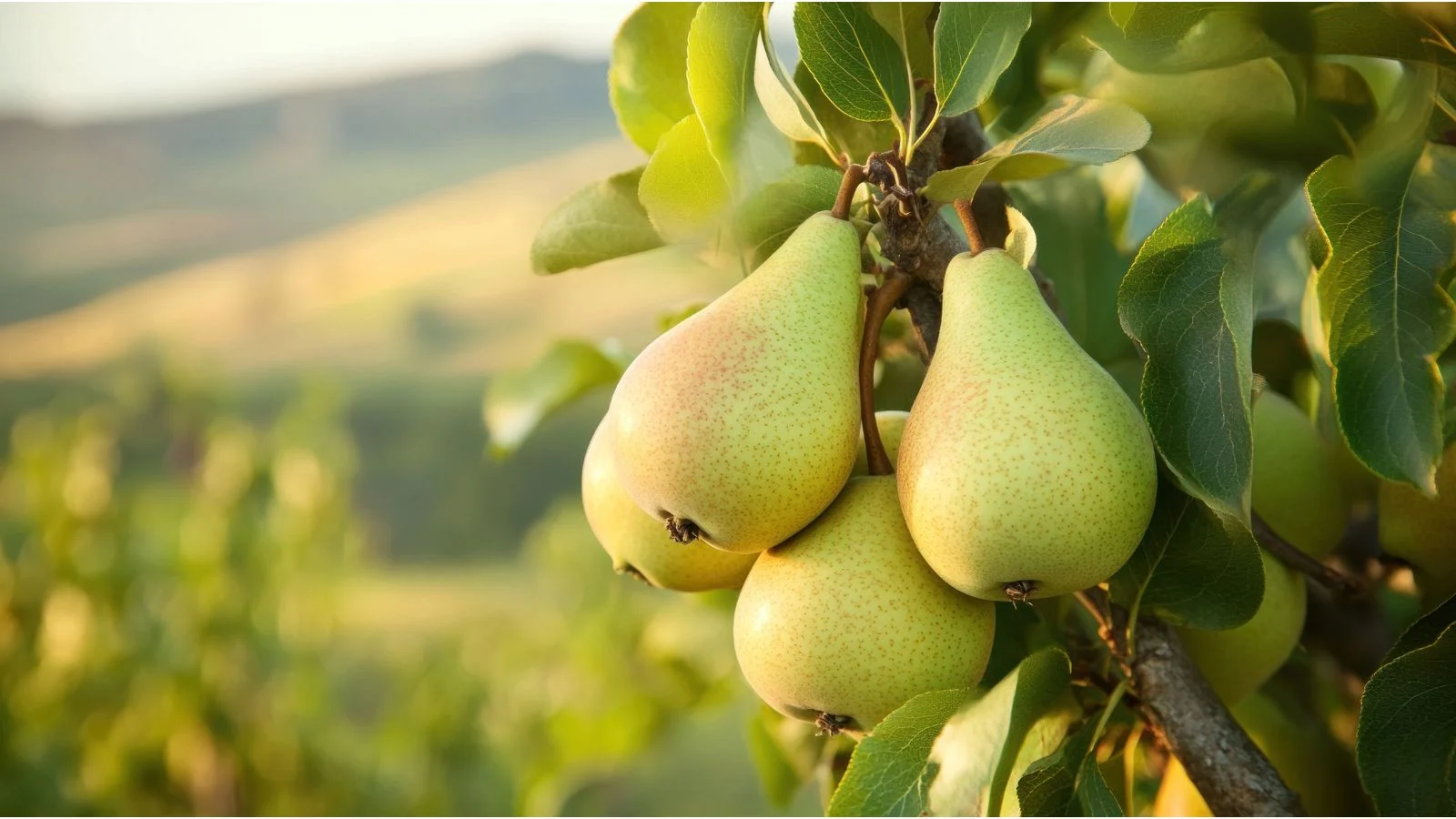
With moderate summers, sufficient rainfall, and rarely extreme temperatures, many pear varieties produce reliable harvests in gardens from Kent to Cumbria.
The key factor for success is variety selection. While Mediterranean pears require long, hot summers, many traditional European cultivars were bred in climates similar to Britain’s. These varieties can ripen fruit even during cooler seasons and tolerate damp conditions that might challenge other orchard crops.
Another advantage is their adaptability to smaller gardens. Pear trees are frequently grown as espaliers or cordons against walls and fences, making them ideal for suburban gardens where space is limited. When trained along a sunny wall, pears often benefit from slightly warmer microclimates that help fruit develop flavour and sweetness.
Garden centres across the country regularly see strong demand from home growers interested in traditional orchard fruits. As a result, many gardeners start their search online for pear trees for sale before deciding which varieties might best suit their particular location.
The fruit trees specialists at ChrisBowers note that British growers often underestimate how well pears can perform in cooler regions. According to the specialists, gardeners choosing from established nursery selections of pear trees for sale should prioritise reliable varieties with proven performance in UK conditions rather than simply selecting those known for flavour alone. Trees grafted onto suitable rootstocks and matched to garden size tend to provide the most consistent harvests over time.
Experienced orchard growers across the UK generally agree that choosing the right cultivar is the single most important decision. Over centuries, several pear varieties have earned reputations for thriving in cooler climates while still producing excellent fruit quality. These cultivars remain the backbone of many British orchards today.
Conference: Britain’s Most Reliable Garden Pear
No list of pears suited to British gardens would be complete without Conference. Introduced in the late nineteenth century and named after the National Pear Conference in London, this variety has become the most widely grown pear in the UK.
One reason for its popularity is reliability. Conference is partially self-fertile, meaning it can produce fruit without another pear tree nearby, although yields improve when pollinated by other varieties. For gardeners with limited space, this characteristic alone makes it an appealing option.
Conference pears develop their familiar elongated shape and russeted skin even in cooler summers. Unlike many dessert pears, they ripen well in Britain’s moderate climate and rarely require extended heat to reach maturity. Harvest usually occurs from late September into early October, depending on location.
The flavour of Conference pears is mild but pleasantly sweet, with a smooth texture when properly ripened indoors after picking. In cooler areas, fruit may benefit from a short period of storage before eating, which allows sugars to develop more fully.
From a horticultural perspective, Conference trees are adaptable and relatively easy to train. They respond well to espalier or cordon forms, which explains their common appearance along garden walls throughout Britain. Their growth habit is also well suited to smaller rootstocks that limit tree size while maintaining productivity.
Disease resistance is another practical advantage. Conference demonstrates moderate resistance to scab and performs well in the damp conditions that can challenge more delicate varieties. This resilience contributes to its reputation as a dependable choice for home orchards.
For gardeners beginning their first small orchard, Conference remains a sensible foundation variety. Its reliability, adaptability, and long-standing success across the UK make it one of the safest pear selections available for cooler British gardens.
Concorde: A Modern British Favourite
While Conference represents tradition, Concorde illustrates how modern breeding has improved pear cultivation in the UK. Developed at the East Malling Research Station in Kent during the late twentieth century, Concorde was created by crossing Conference with the French variety Doyenné du Comice.
The aim of the breeding programme was simple: combine the reliability of Conference with the rich flavour of Comice. The result has proven remarkably successful for British gardeners.
Concorde trees grow vigorously but maintain a tidy structure, making them suitable for garden training systems. Like Conference, they adapt well to espalier forms against fences or walls, where sunlight improves fruit quality. This adaptability has helped Concorde become increasingly popular among home growers.
The fruit itself is distinctive. Pears are long and slightly curved with green skin that gradually develops a light yellow tone during storage. The flesh is creamy, smooth, and noticeably sweeter than Conference, offering a more refined dessert quality.
Another advantage lies in the variety’s cropping consistency. Concorde trees tend to bear fruit regularly and are less prone to alternate-year cropping than some traditional pears. Gardeners appreciate the dependable harvests, particularly in climates where inconsistent summers can affect fruit development.
Ripening usually occurs in October, with pears improving after a short storage period indoors. Stored fruit maintains its quality for several weeks, making Concorde useful for extending the home-grown fruit season.
In cooler British regions, Concorde also demonstrates good resistance to common pear diseases. While no variety is entirely immune to problems such as scab or canker, Concorde typically performs well when basic orchard care is provided.
For gardeners who enjoy the flavour of premium dessert pears but want a tree suited to British conditions, Concorde offers an excellent compromise. Its balance of taste, productivity, and climate tolerance explains why it has become a modern favourite in many UK gardens.
Beth: Early Harvest for Northern Gardens
Beth is often recommended by orchard growers for regions where summers are shorter and cooler. Developed in the United Kingdom during the twentieth century, this variety has proven particularly useful for gardeners in northern England and Scotland.
One of Beth’s greatest advantages is its early harvest period. Fruit typically ripens in early September, sometimes even late August in warmer areas. This early maturity allows pears to develop before autumn temperatures drop, ensuring reliable crops in cooler climates.
The fruit itself is medium-sized with pale green skin that turns slightly yellow when ripe. Beth pears have a delicate sweetness and soft texture when eaten at the correct stage. Unlike some pears that require extended ripening indoors, Beth often reaches eating quality shortly after picking.
Trees are moderately vigorous but manageable in garden settings. They respond well to pruning and training, making them suitable for cordons or fan shapes in smaller spaces. When grown against a south-facing wall, Beth trees can produce particularly consistent harvests.
Another benefit is pollination compatibility. Beth flowers in mid-season and pairs well with many other pear varieties, including Conference and Concorde. This makes it easy for gardeners to combine Beth with other pears to improve pollination and extend the harvest season.
Disease resistance is generally good, though like most pears, Beth benefits from well-drained soil and proper pruning to maintain airflow through the canopy. Good orchard hygiene and regular observation usually prevent major issues.
Because Beth ripens earlier than many other pears, it also helps spread out the harvest period in mixed orchards. Gardeners who plant both early and late varieties can enjoy fresh pears from late summer well into autumn.
For growers in cooler parts of the UK who worry about fruit ripening before autumn weather arrives, Beth provides a reliable and practical solution.
Doyenné du Comice: Exceptional Flavour in the Right Spot
Among pear enthusiasts, Doyenné du Comice is often regarded as one of the finest-tasting dessert pears available. Originating in France in the nineteenth century, this variety is famous for its exceptionally rich flavour and buttery texture.
Despite its continental origins, Comice can perform well in British gardens when given the right conditions. The key requirement is warmth during the growing season. Gardeners often plant Comice trees against sunny south-facing walls, where reflected heat helps fruit ripen fully.
The pears themselves are rounder than many other varieties, with pale green skin sometimes flushed with red. When properly ripened, the flesh becomes soft, aromatic, and extremely juicy. Many orchard growers consider Comice the benchmark for dessert pears.
However, Comice is slightly more demanding than some other varieties. Trees can be sensitive to cold winds during flowering, and fruit may struggle to ripen in very exposed locations. For this reason, growers often recommend sheltered garden sites or trained wall forms that maximise warmth.
Pollination is another consideration. Comice is not self-fertile and benefits from nearby compatible varieties such as Conference or Concorde. In mixed orchards, this requirement rarely presents a problem.
Harvest typically occurs in October, with pears improving after a short storage period indoors. When ripened carefully, Comice pears develop their signature melt-in-the-mouth texture.
Despite its reputation as a slightly more challenging variety, Comice remains widely planted in British gardens. Many growers believe the exceptional flavour justifies the additional care required to cultivate it successfully.
For gardeners willing to provide a warm, sheltered spot, Doyenné du Comice offers a truly outstanding pear that rewards careful cultivation with fruit of remarkable quality.
Williams’ Bon Chrétien: A Classic Dual-Purpose Pear
Williams’ Bon Chrétien, known internationally as Bartlett, is another historic pear variety that continues to perform well in British orchards. Introduced to Britain in the late eighteenth century, it quickly became popular for both eating fresh and culinary use.
The fruit is medium to large, with smooth green skin that turns yellow as it ripens. The flesh is sweet, aromatic, and juicy, making it suitable for dessert as well as preserving and cooking. Because of its distinctive flavour, Williams pears are widely used in jams, chutneys, and even pear-based beverages.
In the garden, Williams trees grow vigorously and form attractive spreading shapes. They adapt well to standard orchard planting but can also be trained against walls or fences in smaller spaces. Regular pruning helps maintain structure and encourages good fruit production.
Flowering occurs in mid-spring, and pollination partners such as Conference or Concorde usually ensure good fruit set. While not fully self-fertile, Williams benefits greatly from cross-pollination in mixed plantings.
Harvest generally takes place in early September, making Williams one of the earlier main-season pears available to British gardeners. Fruit should usually be picked slightly firm and allowed to ripen indoors for optimal flavour and texture.
Williams trees perform best in well-drained soils and sunny locations, though they tolerate typical British weather reasonably well. Like most pears, they benefit from proper pruning and monitoring for diseases such as scab or fire blight, though severe problems are relatively uncommon in well-maintained gardens.
Because of its versatility and long-standing reputation, Williams’ Bon Chrétien remains a valuable addition to many British orchards. It offers reliable harvests, classic pear flavour, and useful culinary applications.
Building a Productive Pear Garden in Britain
Successful pear growing in the UK depends less on climate than many gardeners assume. With careful variety selection and sensible orchard management, pears can become one of the most productive fruit trees in British gardens.
The seven varieties highlighted by orchard growers illustrate the range available to home gardeners. Conference provides unmatched reliability, Concorde adds improved flavour with modern breeding advantages, and Beth ensures early harvests even in cooler regions. Comice delivers exceptional dessert quality when given warmth and shelter, while Williams’ Bon Chrétien offers classic flavour and culinary versatility.
Together, these varieties allow gardeners to create a diverse orchard capable of producing fruit from late summer through autumn. Planting multiple cultivars also improves pollination, which generally leads to heavier and more consistent crops.
Location remains an important consideration. Pears prefer sunny positions with good air circulation and well-drained soil. Training trees against walls can improve ripening conditions, particularly in cooler parts of the country. Regular pruning helps maintain tree health and encourages productive fruiting wood.
Many experienced growers also recommend selecting rootstocks appropriate to garden size. Modern nurseries offer pears on dwarfing or semi-dwarfing rootstocks that make trees easier to manage while still producing generous harvests.
As interest in home fruit growing continues to grow across Britain, pears are receiving renewed attention from gardeners looking for reliable and rewarding orchard crops. Their combination of beauty, productivity, and long tradition in British horticulture ensures they remain a valuable addition to gardens of all sizes.
With the right varieties and thoughtful planting, even small gardens can enjoy the satisfaction of harvesting fresh pears grown at home.
