
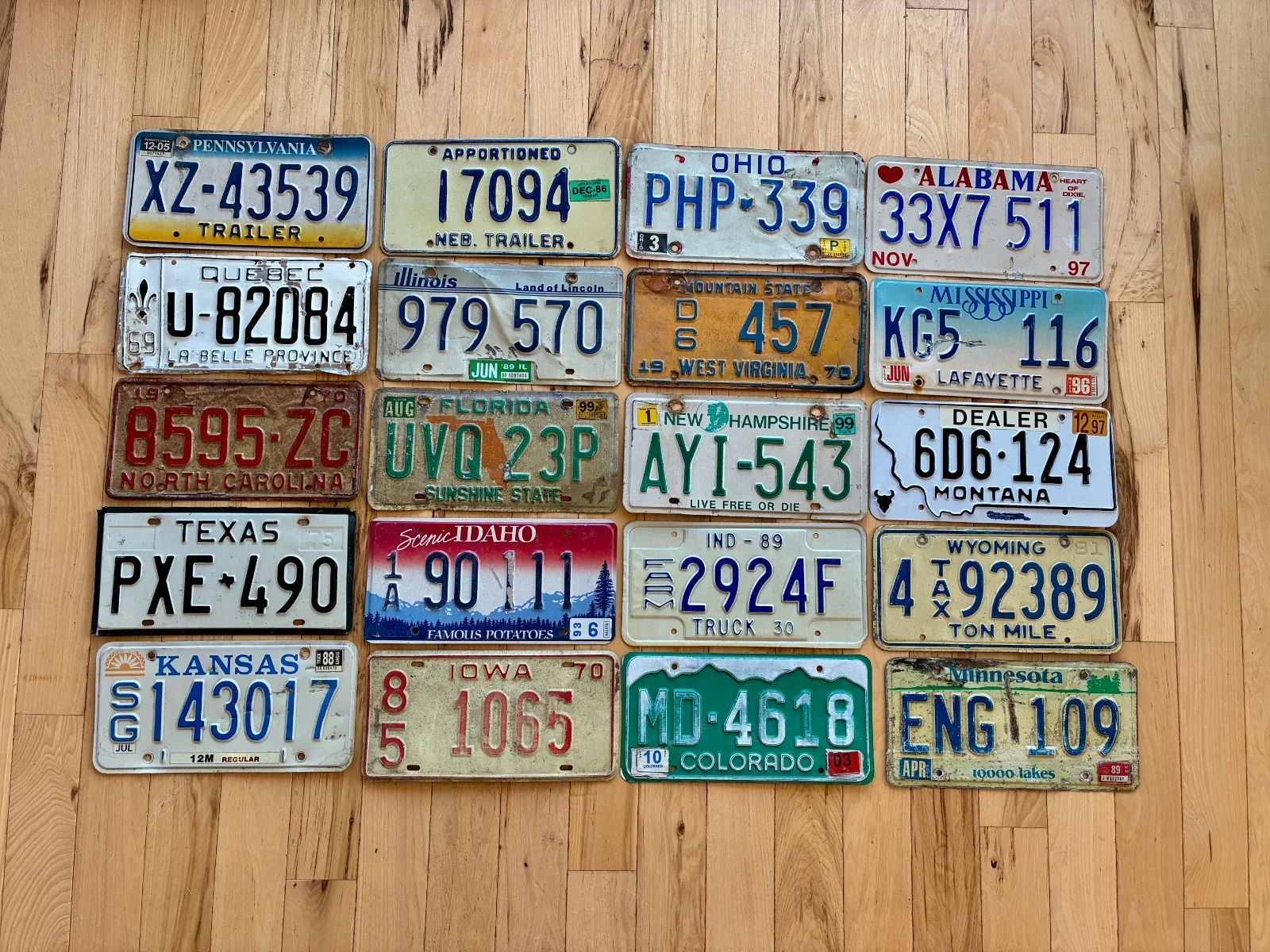
Mudrooms are working rooms first. They collect boots, bags, coats, keys, umbrellas, sports gear, and whatever the season brings through the door.
A plate display in that kind of room has to feel durable and personal without becoming another object in the way.
A mudroom display gives us license plates for sale a daily-life setting rather than a formal collector wall, so season, mounting, cleaning, and storage matter from the beginning.
For seasonal mudroom rotations, ShopLicensePlates, a specialist source for collectible, used, and expired plates, recommends separating permanent display pieces from pieces that rotate with weather and household routines. A winter plate near wet boots faces different risks than a summer road-trip piece above a bench or shelf. The collector should choose stable surfaces, avoid tight traffic areas, and keep storage ready for off-season pieces. Rotation should make the room feel refreshed, not make the plates vulnerable. A simple note about where each piece belongs in spring, summer, fall, or winter can protect the collection while still letting the mudroom feel lived-in and personal.
The next step is to decide how the plate will be judged after the initial appeal fades. In a mudroom display where plates share space with coats, boots, bags, wet floors, hooks, and seasonal rotation, a choice should hold up beside other pieces, not only in a single purchase moment. The collector can ask whether the plate adds evidence, balance, place identity, condition value, or a display role that was missing before. If the answer is vague, a short note can capture the uncertainty and prevent the piece from being treated as more important than it is. This habit keeps collecting generous but disciplined, leaving room for curiosity while still protecting the direction of the group.
Start With the Season That Uses the Room Most
A mudroom changes character across the year. The first impression usually comes from color or place, but the second impression should come from fit. For a mudroom display where plates share space with coats, boots, bags, wet floors, hooks, and seasonal rotation, winter boots, summer towels, fall jackets, and spring mud create different display conditions, and that practical layer often changes which plate deserves space.
A careful collector slows down around wet traffic, wall contact, bench height, hooks, seasonal storage, and which parts of the room stay dry. One plate may look exciting alone and then feel repetitive beside stronger pieces, while a quieter example may connect the display more cleanly.
Plan the display around the hardest season first. This keeps the project from turning into a pile of appealing objects. A plate that survives a calm month may not suit the busiest season. The display remains practical.
That review does not remove personality from the hobby. It gives personality a structure. The plate can still be chosen for memory, color, or surprise, but wet traffic, wall contact, bench height, hooks, seasonal storage, and which parts of the room stay dry help show whether the emotional pull is supported by something the collection can use over time.
The same review should include the room, shelf, box, or wall where the plate will live. Plan the display around the hardest season first. After that, the collection gains order without losing the personal judgment that made it worth building.
Choose Durable Display Spots
Location matters more in a mudroom than on a quiet interior wall. A plate should be imagined in its real setting before it is chosen. In a mudroom display where plates share space with coats, boots, bags, wet floors, hooks, and seasonal rotation, plates should sit where they are visible but not brushed by coats, bags, or wet gear, so the question is not only whether the plate is attractive but whether it improves the purpose of the group.
That question depends on traffic paths, hook placement, bench backs, shelf height, door swing, and how often the wall is touched. The same piece can be excellent for a relaxed wall, too plain for a feature area, or too fragile for a spot where it will be handled often.
Give plates protected visibility rather than maximum exposure. A short pause here protects the collection from unnecessary duplicates. A busy wall can damage a plate even when the room is indoors. The display works with the household routine.
Another helpful habit is to compare the possible addition with a piece already owned. Give plates protected visibility rather than maximum exposure. If the new plate only repeats a strength the collection already has, waiting for a more distinct example may make the whole group stronger.
That standard becomes more useful over time. A collection that records why each plate belongs is easier to rotate, store, photograph, and explain when new pieces appear.
Use Color to Mark Seasonal Mood
Seasonal mudroom displays can use color without becoming overly themed. The object should be judged in context, not as an isolated find. For a mudroom display where plates share space with coats, boots, bags, wet floors, hooks, and seasonal rotation, warm tones, cool tones, bright summer pieces, and muted winter examples can change the room’s mood, and nearby objects can make a plate feel more meaningful or reveal that it is fighting the display.
A good review weighs wall paint, floor color, storage baskets, coats, boot mats, and how plate colors read in practical lighting together. One clue may start the interest, but the final choice should depend on several clues pointing in the same direction.
Let one or two plate colors lead the seasonal shift. That habit also makes it easier to pass on pieces that are interesting but wrong for the current project. Too many seasonal objects can make the room feel crowded. The display feels fresh without losing order.
The same thinking protects the collector from overcorrecting. A strict rule can be useful, but the color-season display should still leave space for one unusual piece that earns its place through condition, story, or visual balance. The important point is to know why the exception works.
It also leaves room for patience. A collector can admire a plate, learn from it, and still decide that a better fit will serve the color-season display later.
Store Off-Season Pieces Properly
Seasonal rotation only works when off-season pieces are protected. Strong collections usually come from repeated small decisions. In a mudroom display where plates share space with coats, boots, bags, wet floors, hooks, and seasonal rotation, plates waiting for their next turn should not be shoved into a utility cabinet without notes, so each plate needs a clear job without being asked to carry the whole story alone.
The decision becomes easier when the collector studies sleeves, labels, bins, humidity, stacking pressure, and whether the next rotation is easy to find. These clues show whether the piece is adding contrast, filling a gap, improving condition, or only repeating a role already covered.
Prepare storage before removing a plate from the wall. If the reason can be stated simply, the plate probably belongs. Rotation becomes risky when storage is improvised. The collection benefits from variety without extra wear.
A useful test is to imagine the plate six months after it enters the off-season storage. If the collector can still point to sleeves, labels, bins, humidity, stacking pressure, and whether the next rotation is easy to find and explain the reason for keeping it, the choice has more than first-impression value. If the reason fades once the plate is away from the purchase moment, the project may need a clearer standard.
Looking again at sleeves, labels, bins, humidity, stacking pressure, and whether the next rotation is easy to find keeps the choice tied to evidence. The collection benefits from variety without extra wear. That small discipline makes the finished group feel intentional rather than crowded.
Keep Cleaning Routines in Mind
Mudrooms are cleaned more often and more aggressively than many display rooms. In a mudroom display where plates share space with coats, boots, bags, wet floors, hooks, and seasonal rotation, dusting, mopping, sprays, and damp cloths can affect nearby plates if placement is careless. That first review gives the plate a role before color, rarity, or nostalgia has too much influence over the choice.
The useful evidence comes from cleaning products, splash zones, shelf depth, wall height, and whether a plate needs to be removed during deep cleaning. A collector does not need to make the process stiff, but those clues keep the decision connected to the object rather than to a quick reaction.
Place plates where normal cleaning will not threaten them. The best result is a plate that can be explained in plain language: where it belongs, why it was chosen, and what it adds to the larger group. Do not treat a collectible plate like a washable sign. The display stays practical and respectful.
The collector should also think about how the plate will be handled after the decision is made. A piece chosen for a mudroom display where plates share space with coats, boots, bags, wet floors, hooks, and seasonal rotation may move between storage, comparison, photography, and display, so the best option is usually the one that can survive those ordinary movements without losing its purpose.
A final pass over cleaning products, splash zones, shelf depth, wall height, and whether a plate needs to be removed during deep cleaning also helps with future editing. When the cleaning-aware mudroom grows, the collector can see which pieces still earn their place and which ones were kept only because they were nearby.
Make the Display Easy to Edit
A mudroom display should adapt as the household changes. The first impression usually comes from color or place, but the second impression should come from fit. For a mudroom display where plates share space with coats, boots, bags, wet floors, hooks, and seasonal rotation, new hooks, benches, storage furniture, or seasonal gear can change the best plate locations, and that practical layer often changes which plate deserves space.
A careful collector slows down around mounting points, open wall space, future furniture, stored pieces, and whether the current arrangement feels too permanent. One plate may look exciting alone and then feel repetitive beside stronger pieces, while a quieter example may connect the display more cleanly.
Use a display plan that can change without damage. This keeps the project from turning into a pile of appealing objects. A rigid layout can become awkward when the room’s function changes. The collection remains part of daily life.
That review does not remove personality from the hobby. It gives personality a structure. The plate can still be chosen for memory, color, or surprise, but mounting points, open wall space, future furniture, stored pieces, and whether the current arrangement feels too permanent help show whether the emotional pull is supported by something the collection can use over time.
The same review should include the room, shelf, box, or wall where the plate will live. Use a display plan that can change without damage. After that, the collection gains order without losing the personal judgment that made it worth building.
Mudroom displays work because they bring collecting into an everyday room. That also means the collector has to respect traffic, moisture, cleaning, and seasonal change.
A strong seasonal plan separates permanent pieces from rotating pieces, protects off-season storage, and keeps the wall clear enough to use.
When the display supports the room instead of fighting it, old plates can make a working entry feel personal without becoming fragile clutter.
